
Sitting in the consultation chair weighing clear aligners against braces is something families do here every week, and at Rice Orthodontics we help you and your family compare the options with real answers. Both clear aligners and braces straighten teeth beautifully, but they work in very different ways. The right fit depends on your smile goals, your daily routine, and the complexity of your bite.
What Are Invisalign and Braces?
Invisalign uses clear, removable aligners that gently shift teeth over time. Braces use small brackets bonded to each tooth and connected by a wire that guides movement. Both correct crowding, gaps, and bite issues, but one is nearly invisible and comes out for meals, while the other stays fixed in place until you finish. You can see how Invisalign at Rice Orthodontics compares in daily wear.
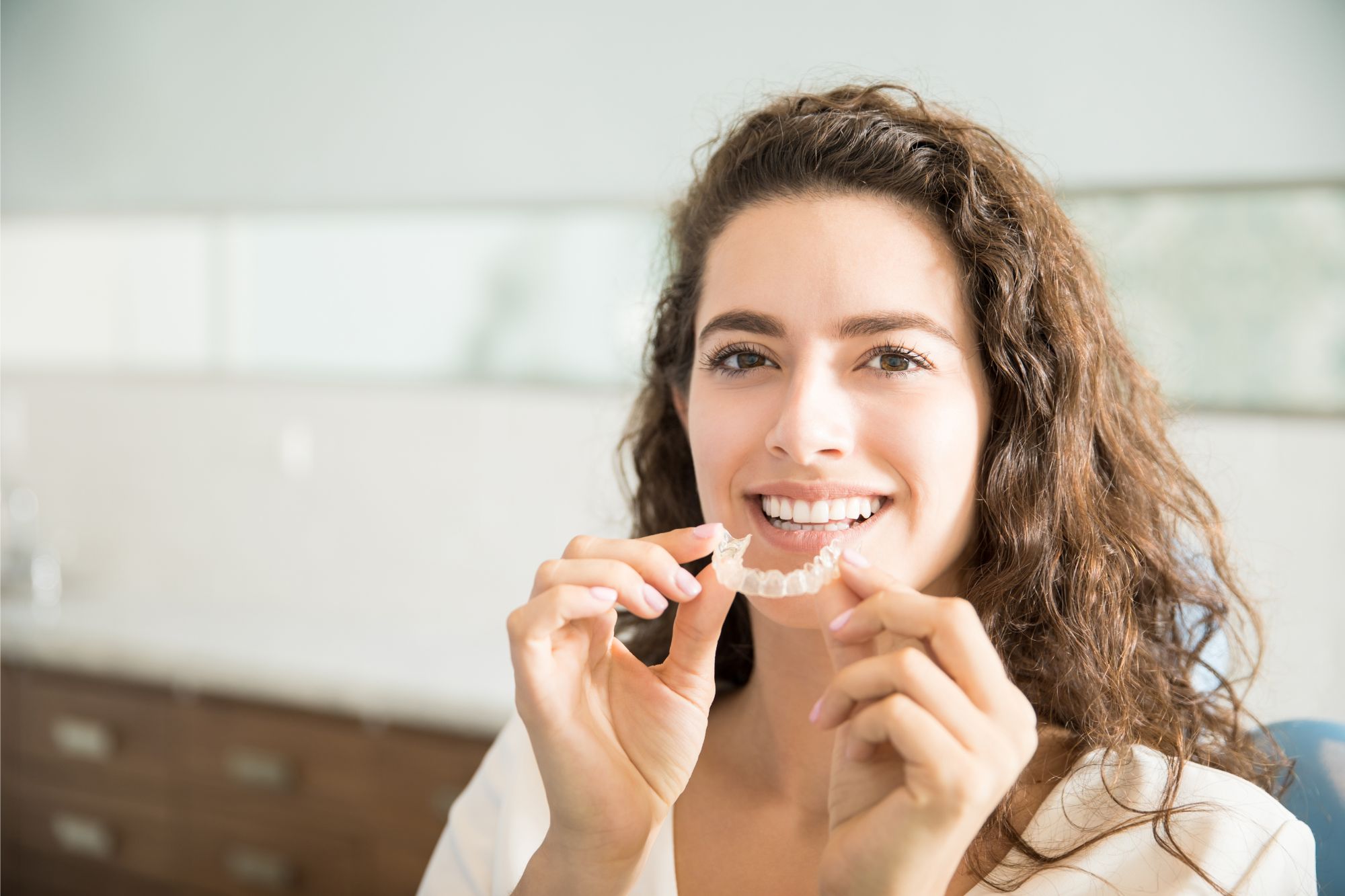
Clear aligners are made from smooth, medical-grade plastic and are nearly invisible when worn. You swap trays every one to two weeks, and each set moves your teeth a little closer to the final result.
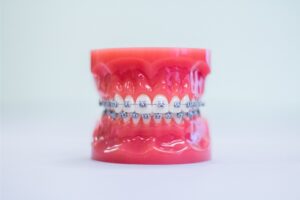
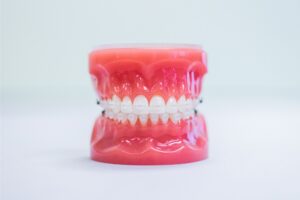
Braces are a fixed option, meaning they stay on until your treatment is complete. Modern braces come in a few forms:
- Metal braces with durable stainless-steel brackets
- Ceramic braces that blend in with tooth-colored brackets on your top teeth
- Lingual braces placed behind your teeth so they stay hidden from view
Deciding how to choose the right treatment really comes down to three things: how visible you want your care to be, how well the option fits your lifestyle, and how complex your case is. Dr. Rice walks you through each factor during your free consultation, so you can make a confident choice.
How Do Invisalign and Braces Work?
Invisalign works through a series of custom clear trays changed every one to two weeks, worn 20 to 22 hours a day and removed only to eat, drink, and brush. Braces work through brackets bonded to your teeth connected by a wire that Dr. Rice adjusts every four to eight weeks, applying gentle, steady pressure to shift teeth into place.
With clear aligners, your care starts with a digital scan of your teeth. Dr. Rice maps out every stage of your smile transformation in advance, and you receive a full set of clear aligners in Jacksonville to wear in order.
Here’s what a typical clear aligner routine looks like:
- Wear your current tray 20 to 22 hours daily
- Pop them out for meals, snacks, and brushing
- Switch to your next set every one to two weeks
- Check in with Dr. Rice every six to eight weeks
Braces follow a different rhythm. Once the brackets are bonded and the wire is in place, the wire does the work between visits. During each adjustment, Dr. Rice replaces or tightens the wire so your teeth keep moving on schedule. Progress is monitored through in-office checkups and, when helpful, digital scans that track how your bite is changing. If you are weighing braces in Jacksonville, each style is worth a closer look.
Both approaches give you a personalized treatment plan built around your specific goals.
Benefits of Invisalign and Braces
Each option brings real advantages, and part of choosing well is knowing what each one does best.
Benefits of clear aligners (Invisalign):
- Nearly invisible, so hardly anyone knows you’re straightening your teeth
- Removable for eating, brushing, and flossing
- No food restrictions, so pizza crust and popcorn are still on the menu
- Smooth plastic that’s comfortable against your cheeks and gums
- Often fewer in-office visits thanks to digital planning
- Easier oral hygiene since you brush and floss normally
Benefits of braces:
- Highly effective for complex crowding, rotations, and bite corrections
- No compliance needed, since they work 24/7 without you thinking about it
- Great fit for younger children and teens still developing habits
- Ceramic braces let you blend in with subtle, tooth-colored brackets on your top teeth
- Lingual braces hide braces behind your teeth for a completely hidden option
- Predictable, proven results across a wide range of cases
Both paths lead to beautiful, forever smiles. Dr. Rice and our team at Rice Orthodontics help you and your family weigh which set of benefits matters most for daily life, school, work, and long-term oral health. An orthodontist completes additional years of specialized training beyond dental school, which means your care is guided by an expert in tooth and jaw movement.
Invisalign vs Braces: Side-by-Side Comparison
When you line them up next to each other, the differences become much easier to see, and it becomes simpler to choose the right treatment for your family. Here’s a quick-scan comparison to help you talk through the options at home.
| Feature | Clear Aligners (Invisalign) | Braces |
|---|---|---|
| Appearance | Nearly invisible clear trays | Visible metal, subtle ceramic, or hidden lingual |
| Comfort | Smooth plastic, no brackets or wires | Some initial bracket or wire irritation, eases over time |
| Removability | Fully removable for meals and cleaning | Fixed in place until treatment ends |
| Maintenance | Rinse trays, brush and floss normally | Careful brushing and flossing around brackets and wires |
| Food restrictions | None; take them out to eat | Avoid sticky, hard, and crunchy foods |
| Discipline required | High; must wear 20 to 22 hours a day | Low; treatment continues automatically |
| In-office visits | Every 6 to 8 weeks | Every 4 to 8 weeks for adjustments |
| Case complexity | Great for mild to moderate cases | Often better for complex bites and rotations |
| Best for | Adults, teens who’ll stay consistent | Kids, teens, adults with more involved corrections |
Comfort tends to be a big talking point. Clear aligners are smooth all over, while brackets can occasionally rub before your cheeks adjust. On the flip side, braces never come out, so there’s no risk of forgetting to put them back in after lunch.
The bottom line: clear aligners reward discipline with subtlety, and braces reward you with steady, hands-off progress. Both can deliver the smile you’ve dreamed of when matched to the right patient.
Cost Factors for Invisalign and Braces
The cost of clear aligners and braces comes down to how complex your case is, how long your treatment takes, and the specific option you choose. Insurance benefits paired with a payment plan help offset your out-of-pocket cost, and lingual and ceramic braces usually cost more because of the materials involved.
A few factors that shape your final estimate:
- The complexity of your bite and how much movement is needed
- The length of your personalized treatment plan
- Whether you choose metal, ceramic, lingual, or clear aligners
- Your orthodontic insurance benefits
- Any additional appliances that support your smile transformation
We accept many types of insurance and offer flexible financing so cost doesn’t stand between you and a healthier smile. During your free consultation, Dr. Rice reviews your goals, walks you through your options, and gives you a clear, personalized estimate. That way you know exactly what to expect before you start your smile journey.
Who Is a Good Candidate for Each Option?
Great candidates for clear aligners tend to be teens and adults with mild to moderate crowding, spacing, or bite issues who can commit to wearing trays 20 to 22 hours a day. Braces are often the stronger choice for complex bites, significant rotations, and younger children whose smiles are still developing. This is where knowing how to choose the right treatment really pays off, and it’s something families across Jacksonville ask us about often.
Here’s a quick way to think about it:
- Consider clear aligners if you: want a nearly invisible option, prefer removable treatment, have a mild to moderate case, and can stay consistent with wear
- Consider braces if you: have a more complex bite, want a set-it-and-forget-it option, are a younger child or teen, or prefer ceramic or lingual styles for a discreet look
Age isn’t a barrier for either treatment. Children, teens, and adults all benefit from a straighter, healthier smile, and modern options make it easier than ever to find one that fits. The best way to know for sure is an in-person evaluation with an orthodontist. Dr. Jason Rice reviews your teeth, bite, X-rays, and goals to confirm which path will get you the smile of your dreams.
Frequently Asked Questions
Which is faster, Invisalign or braces?
Speed depends on the complexity of your case, not the type of treatment. Some mild cases finish faster with clear aligners because progress is planned digitally from the start, while more involved bite corrections often move most efficiently with braces. Dr. Rice gives you a realistic timeline during your free consultation.
Does Invisalign hurt less than braces?
Both treatments cause mild soreness when teeth start shifting or after an adjustment, and that’s a normal sign your smile transformation is working. Clear aligners have smooth edges that tend to be gentler on cheeks and lips, while braces can occasionally cause minor irritation until your mouth adjusts. Warm salt-water rinses help with either option.
Can Invisalign fix the same problems as braces?
Clear aligners can address many of the same issues, including crowding, gaps, and common bite problems. That said, very complex rotations, severe bite corrections, or certain jaw issues are still best treated with braces. Dr. Rice will tell you honestly which option gets you the best result.
How long does each treatment take?
Most orthodontic treatment often takes about 12 to 24 months, though it varies from case to case, and shorter and longer plans do happen. Your timeline depends on how much movement is needed and, for clear aligners, how consistently you wear them. Dr. Rice confirms your specific timeline once he reviews your teeth and bite in person.
Are braces or Invisalign better for teens?
Both work well for teens. Braces are a strong choice for teens who prefer not to think about compliance, while clear aligners suit teens who are responsible about wearing and caring for their trays. Family lifestyle, sports, and school routines all play a role. Many families across Jacksonville find that a quick visit clears up which option fits their teen best.
Can I switch from braces to Invisalign?
In some cases, yes. If your teeth have made progress but you’d like to finish in clear trays, Dr. Rice can evaluate whether switching mid-treatment makes sense for your goals and your bite. He and our team at Rice Orthodontics will walk you through the trade-offs so your smile journey stays on track and you reach the smile you’ve dreamed of.