Choosing between clear braces or metal braces is one of the first big decisions you’ll make when planning your smile transformation. Both options straighten teeth beautifully, but they differ in appearance, cost and best-fit cases. At Rice Orthodontics, Dr. Rice helps you and your family weigh the trade-offs so you land on the option that fits your lifestyle, budget and smile goals.
Clear Braces vs. Metal Braces: What’s the Difference?
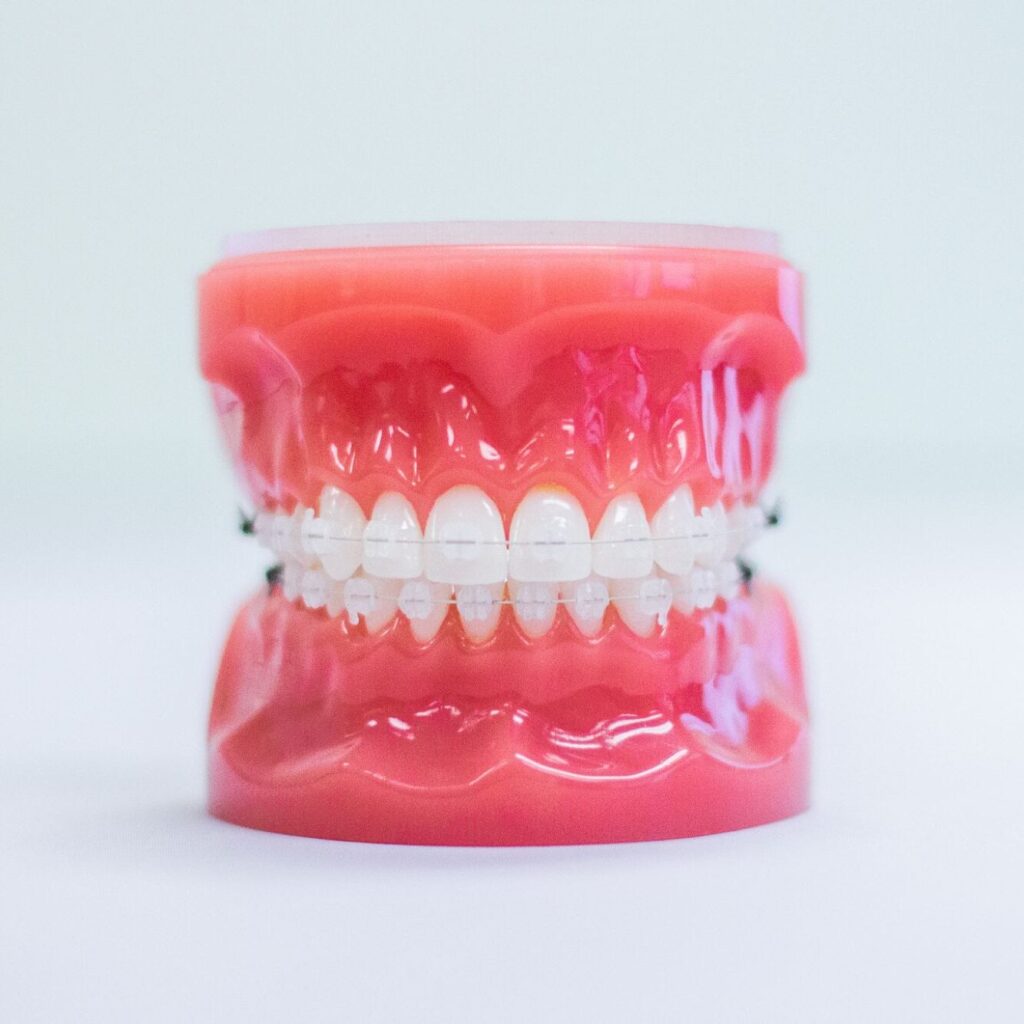
Metal braces use stainless steel brackets and archwires to move teeth. Clear braces (also called ceramic braces) use tooth-colored brackets that blend with your enamel. Both systems rely on the same bracket-and-wire mechanics to shift teeth gently into place. The main differences come down to looks, price, durability and which cases each handles best.
Metal braces are the proven standard, trusted for generations and built to handle even the most complex bite corrections. Ceramic brackets offer a more discreet look, which appeals to teens and adults who feel self-conscious about visible hardware.
At Rice Orthodontics, Dr. Rice offers both metal braces and ceramic braces, along with clear aligners and lingual braces. That range means you’re not forced into one path. During your free consultation, Dr. Rice reviews your bite, your schedule and your preferences before recommending the best match for your smile transformation.
How Each Type of Braces Moves Your Teeth
Both clear and metal braces work the same way. Small brackets are bonded to each tooth, and an archwire threads through them. That wire applies steady, gentle pressure that guides your teeth into their new positions over time.
Here’s how the process works, step by step:
- Bonding day. Dr. Rice attaches each bracket to the front of your teeth using a tooth-safe adhesive. The archwire is then placed and secured.
- Ties and elastics. Tiny elastic or metal ties hold the wire to each bracket. With metal braces, many patients enjoy picking fun colors at each visit.
- Adjustment visits. You’ll come in every 4 to 8 weeks so your archwire and ties can be swapped out. Each adjustment keeps your teeth moving on schedule.
- Progress checks. Dr. Rice tracks how your bite is responding and fine-tunes your personalized treatment plan as needed.
- Removal and retention. Once your teeth are in their final positions, brackets are removed and a retainer protects your new smile.
Ceramic brackets function identically to metal, but the material is slightly more brittle, so Dr. Rice may recommend extra care with hard or crunchy foods. Treatment length is typically 12 to 24 months for both options, depending on how much movement your case requires. Other options like lingual braces, which hide behind your teeth, are also available for specific needs.
Benefits of Clear Braces vs. Metal Braces
Each option brings real advantages. The right pick depends on what matters most to you.
Benefits of metal braces:
- Most durable material, built to handle active lifestyles and high-force cases
- Most budget-friendly option, making them workable for a wider range of families
- Capable of correcting the most complex bites, including severe crowding or jaw alignment issues
- Fun colored elastics let kids and teens express their personality at every visit
- Proven track record built over decades of orthodontic use
Benefits of clear (ceramic) braces:
- Tooth-colored brackets blend with your enamel and are hard to spot from conversational distance
- Ideal for professionals, public speakers and image-conscious adults who want a lower-profile look
- Ceramic brackets themselves don’t stain, so your braces stay looking fresh
- Elastic ties are swapped at every adjustment, so any color pickup is temporary
- Smooth brackets feel comfortable against lips and cheeks
- A great middle ground between metal braces and clear aligners
What both options share:
- Equally effective at correcting crowding, spacing and most bite issues
- Fixed to your teeth, so there are no compliance worries like with removable aligners
- Backed by Dr. Rice’s experience and the full support of our team at Rice Orthodontics
- Compatible with the same personalized treatment plan approach
For many families, the choice comes down to a simple question: is appearance or budget the bigger priority?
Clear vs. Metal Braces: Side-by-Side Comparison
To make the decision easier, here’s how the two options stack up across the factors most people care about.
| Feature | Metal Braces | Clear (Ceramic) Braces |
|---|---|---|
| Appearance | Visible stainless steel brackets | Tooth-colored, blends with enamel |
| Cost | Most budget-friendly option | Typically runs higher than metal |
| Durability | Extremely strong, resists breakage | Slightly more brittle, needs gentle care |
| Treatment time | 12-24 months typical | 12-24 months typical |
| Case range | Handles any case, including complex | Handles most cases, not always severe ones |
| Comfort | Smooth, modern brackets | Smooth ceramic brackets |
| Best lifestyle fit | Athletes, active kids and teens, budget-minded families | Client-facing professionals, image-conscious adults, older teens |
| Color options | Fun colored elastics at each visit | Clear or white elastics for a subtle look |
| Adjustment visits | Every 4-8 weeks | Every 4-8 weeks |
Both options deliver beautiful, forever smiles when paired with the right treatment plan. The table gives you a quick reference, but your free consultation with Dr. Rice is where the real decision gets made.
What Affects the Cost of Clear and Metal Braces?
The cost of braces depends on four main factors: case complexity, treatment length, material choice and your insurance benefits. Minor spacing corrections cost less than full bite correction. Longer treatment means more visits and a higher total cost. Ceramic brackets cost more to make than stainless steel, which is why clear braces typically cost more than metal.
Many dental insurance plans include orthodontic benefits that can cover part of either option, though every plan is different. Our team at Rice Orthodontics helps you understand your benefits so there are no surprises.
Your free consultation with Dr. Rice is the best place to learn your exact treatment cost before committing. Ask our team about payment options that can make treatment fit your budget. The goal is simple: get you the smile of your dreams without the budget becoming a roadblock.
Who’s a Good Candidate for Clear vs. Metal Braces?
Both options work for teens and adults at nearly any age, but each has sweet spots. Use the checklist below to see which direction suits your situation.
Metal braces are a strong fit if you:
- Have a complex bite, significant crowding or a need for major jaw alignment work
- Want the most budget-friendly option
- Live an active lifestyle or play contact sports
- Love the idea of picking fun elastic colors at each visit
- Prefer the most durable, time-tested option available
- Have a child or younger teen who may be rough on their hardware
Clear (ceramic) braces are a strong fit if you:
- Work in a client-facing role where appearance matters
- Are a teen worried about how braces will look in photos or on social media
- Are an adult who wants discreet treatment without going fully clear with aligners
- Have a mild to moderate case that doesn’t require heavy-duty mechanics
- Are willing to be a little more careful with hard, crunchy foods
- Want a middle ground between visible metal and removable aligners
A few special notes:
- Severe overcrowding or jaw misalignment typically favors metal braces for predictable results
- Contact-sport athletes and anyone with a high-impact lifestyle often do better with the durability of metal
- Older teens and adults who can commit to gentler eating habits are often great candidates for ceramic
Ultimately, the right choice comes from a professional evaluation. Dr. Jason Rice reviews your case in detail at your free consultation. From there, you’ll get a personalized treatment plan built around your bite, your goals and your life.
Frequently Asked Questions
Is it better to get clear braces or metal braces?
Neither is universally better. It depends on your budget, how complex your case is and how much the appearance of your braces matters to you. Metal braces cost less and handle any case, while clear braces offer a discreet look that’s great for professionals and image-conscious teens or adults. Dr. Rice helps you weigh these factors at your free consultation.
Are clear braces as effective as metal braces?
Yes, for most cases. Clear braces use the same bracket-and-wire mechanics as metal, so they move teeth just as reliably. The main difference is that ceramic brackets are slightly more brittle, which can make them less ideal for very severe bite corrections or patients with highly active lifestyles. For routine to moderately complex cases, clear braces deliver the same beautiful, forever smiles.
Do clear braces stain?
The ceramic brackets themselves do not stain. The small elastic ties that hold the wire in place can pick up color from coffee, tea, red wine or tomato-based foods, but those ties are swapped out at every adjustment visit (typically every 4 to 8 weeks). That means any staining is temporary and your braces stay looking fresh.
Can I switch between clear and metal mid-treatment?
Sometimes, yes. Switching usually involves removing and rebonding brackets, which adds cost and may affect your timeline. If you’re considering a change, talk with Dr. Rice at your next visit. He’ll walk you through what’s possible and whether it’s a smart move for your specific case.
How do I know which type of braces is right for me?
The best way is a professional orthodontic evaluation. At Rice Orthodontics, your free consultation includes a full bite assessment, a conversation about your lifestyle and goals, plus a clear breakdown of your options. Dr. Rice then builds a personalized treatment plan that fits your smile, your schedule and your budget.
Will braces affect my speech or eating?
Expect a short adjustment period of a few days with either option. Your tongue and cheeks need a little time to get used to the brackets, and certain foods (hard candies, sticky caramels, crunchy nuts) should be avoided throughout treatment. Most patients are eating and talking normally within a week of getting their braces on.
Ready to find out which option fits your smile best? Dr. Jason Rice and our team at Rice Orthodontics offer free consultations at both of our locations: our Jacksonville office at 8708 Perimeter Park Blvd., Ste. #2, and our Nocatee office at 203 Fort Wade Rd., Ste. #120 in Ponte Vedra Beach. Call us today at 904-646-7000 or book your free consult online to take the first step toward your new smile. We’ll help you choose with confidence.